
Botanical ingredient
Moringa: What It Is, What It Brings and How to Choose a Supplement
Moringa oleifera · Also known as Mlonge (Swahili), drumstick tree, zogale (Hausa)

Moringa is the most important home-grown supplement ingredient in Africa. Its leaves are a true food with a rich nutrient profile, which makes it one of the most nourishing botanicals you can add to your day-to-day diet.
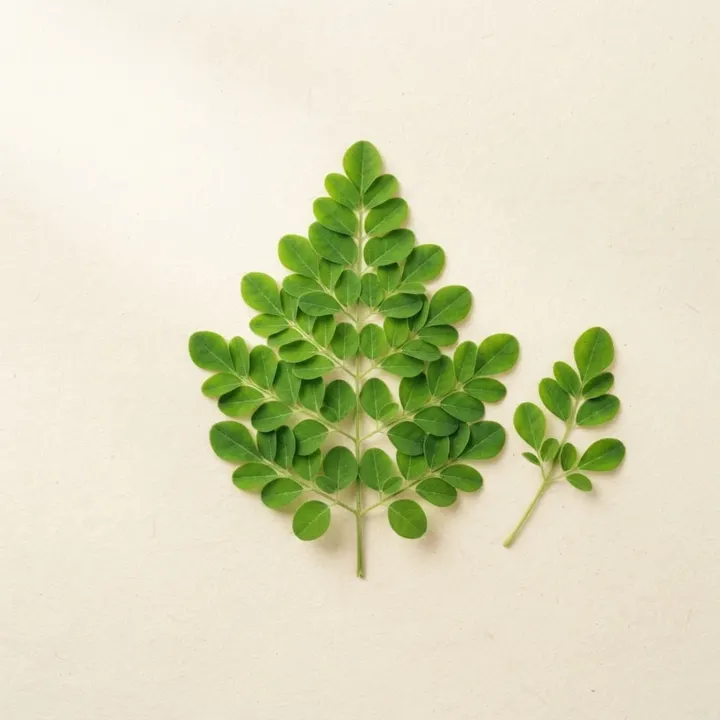
What is moringa?
Moringa oleifera is a fast-growing tree cultivated across Kenya, Tanzania, Ghana, Nigeria and much of the tropics. Its leaves, pods and seeds are all used, and the dried leaf powder is what most supplements contain.
Dried moringa leaf supplies protein, calcium, iron, potassium and vitamins A and C in quantities that are relevant at food-scale intakes, which is unusual for a botanical supplement.
Traditional and regional use
Moringa is a food crop and household remedy across East and West Africa, eaten as a leafy vegetable, brewed as tea and used in porridge for children and nursing mothers. Local production also makes it one of the few supplement ingredients that is not import-dependent.
What is moringa known for?
Good to know. Supplements containing moringa are food supplements, so their labels describe support for everyday wellbeing.
Moringa’s great strength is nutritional: as a leafy vegetable it contributes measurable amounts of protein, minerals and vitamins to the diet.
Human studies have looked at moringa in connection with healthy blood sugar and blood lipid levels, which is why it appears in blood-sugar and wellness formulas.
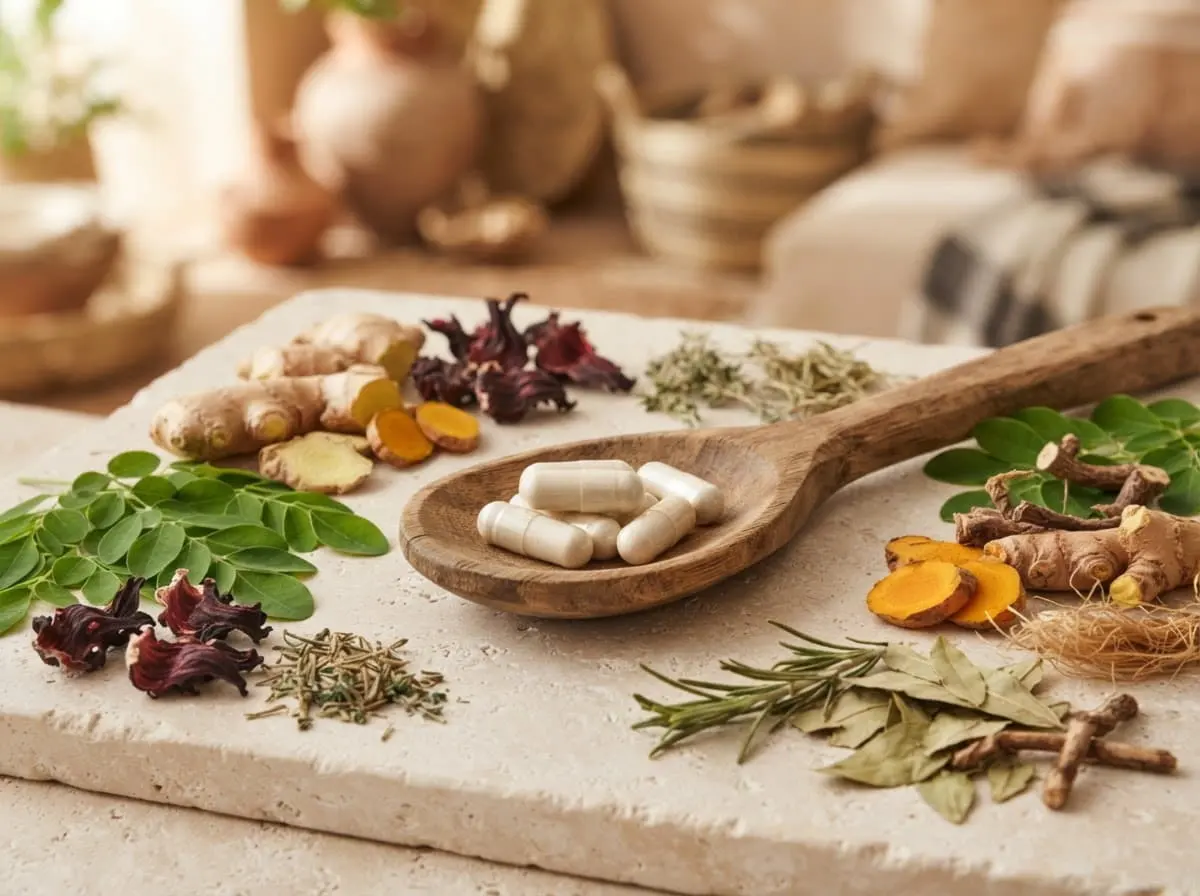
How is it used in supplements?
Moringa is sold as a single-ingredient leaf powder or capsule and as a component of greens blends, immune formulas and general wellness products. Doses vary from a few hundred milligrams to several grams of leaf powder.
Forms and sources
- Dried leaf powder
- Leaf powder capsules
- Moringa seed oil (cosmetic and culinary)
- Teas and blends
Safety
- Leaf material is eaten as a vegetable and is generally well tolerated.
- Root and root bark are a different matter and are not recommended for supplement use.
- Very high intakes of leaf powder can cause digestive upset.
Possible side effects
Loose stools and stomach discomfort at high intakes; some people dislike the strong grassy taste.
Interactions
May be relevant with diabetes, blood pressure and thyroid medication because of possible additive effects. Discuss with a pharmacist if you take these daily.
Who should seek professional advice
Anyone pregnant should avoid moringa root and bark products and confirm leaf use with a midwife or doctor. People on chronic medication should check for additive effects.
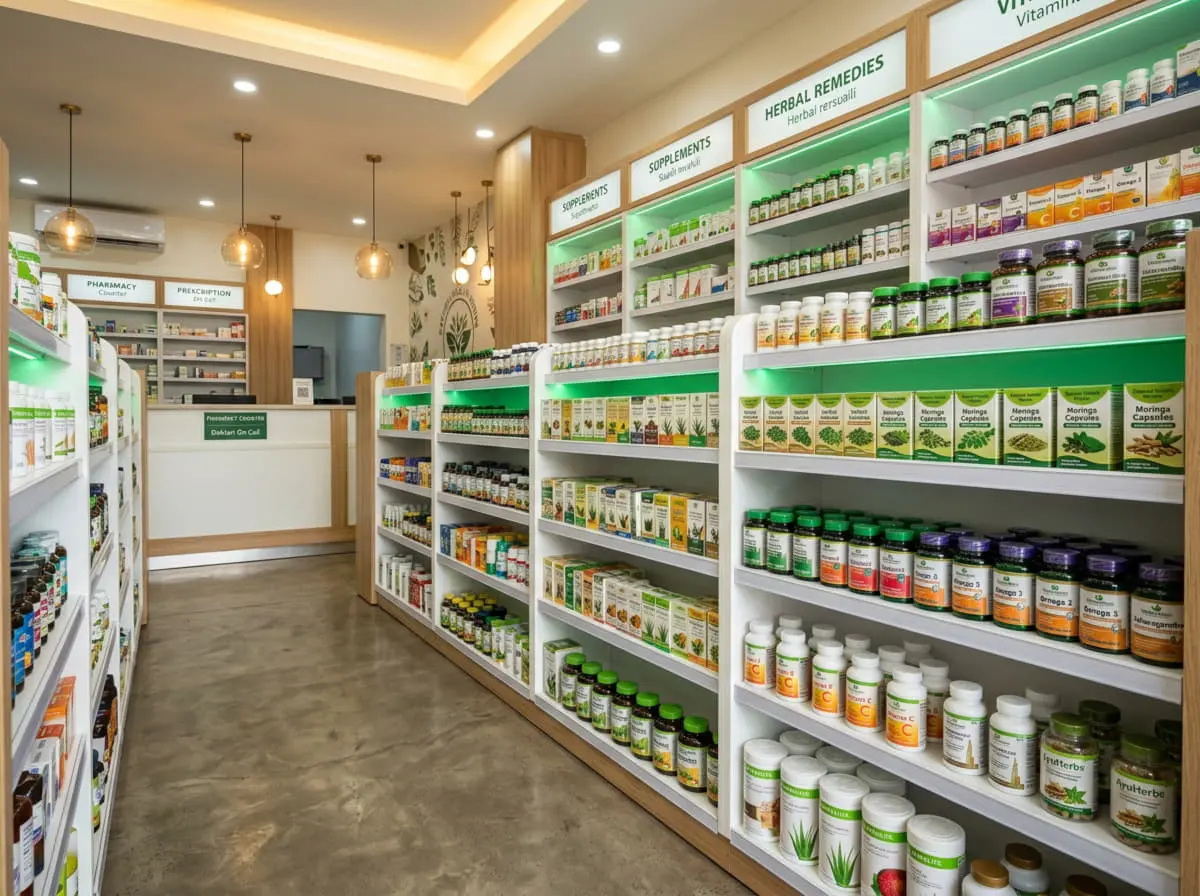
How to choose a supplement containing moringa
- Buy leaf powder that states its origin and harvest or best-before date; colour should be a vivid green, not brown.
- Confirm the product is leaf, not root or bark.
- Take it daily with water or stirred into porridge, alongside a balanced diet.
Supplement categories using this ingredient
Related health topics
Frequently asked questions
Is moringa a complete protein source?
Moringa leaf contains protein and is a useful dietary contribution. At supplement amounts it is best thought of as a micronutrient-rich green that complements your meals.
Can I use moringa from my own tree?
Yes, moringa leaf is a food. Wash and dry it properly and store it away from light to preserve its nutrient content.
Related ingredients
References
- NCCIH — Herbs at a Glance
- NCCIH — Herbs at a Glance — US National Center for Complementary and Integrative Health: plain-language summaries of what is known about individual botanicals.
- NIH Office of Dietary Supplements — fact sheets — Nutrient-by-nutrient fact sheets with intake levels and interaction notes.
- How we choose sources
Medical disclaimer. BioMedic Africa publishes consumer health information and supplement research summaries. It is not a pharmacy, a clinic or a medicines regulator, and nothing here is a diagnosis, a prescription or a treatment plan. Dietary supplements are foods, not medicines: they are not intended to diagnose, treat, cure or prevent any disease. Speak with a pharmacist or a qualified healthcare professional before starting any supplement, especially if you are pregnant or breastfeeding, under 18, living with a long-term condition, or taking prescription medication.