
Botanical ingredient
Hibiscus: What It Is, What It Brings and How to Choose a Supplement
Hibiscus sabdariffa · Also known as Roselle, zobo (Nigeria), karkade, sorrel

Hibiscus is the deep red drink known as zobo in Nigeria and karkade across the Sahel, and one of the best-researched botanicals in the heart-wellbeing category.
What is hibiscus?
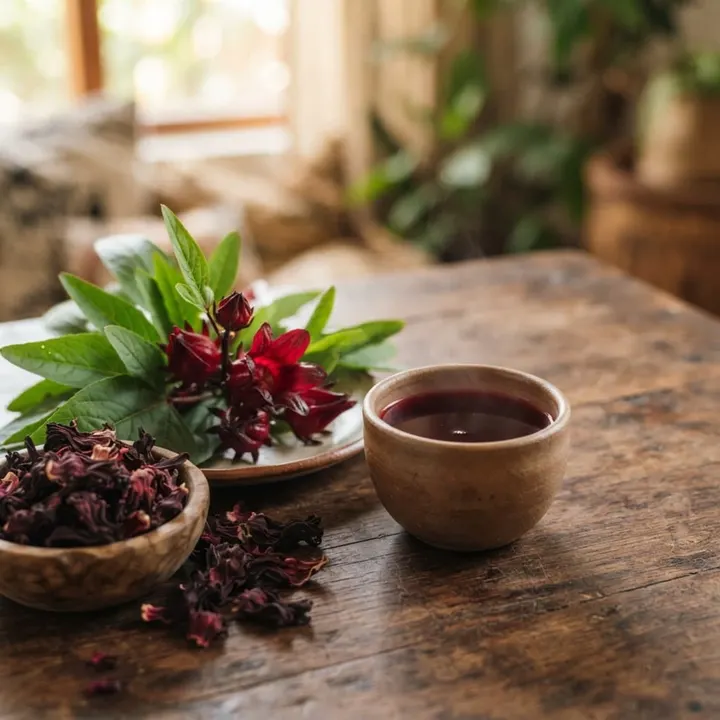
The supplement ingredient is the dried calyx of Hibiscus sabdariffa, not the ornamental flower. Brewed, it yields a tart ruby-coloured drink rich in anthocyanins and organic acids.
Hibiscus is grown commercially in Nigeria, Sudan and Senegal, and is consumed daily in many West African households.
Traditional and regional use
Zobo, bissap and karkade are the same drink under different names across West and North Africa, served cold and often spiced. Traditional use as a cooling, refreshing beverage predates any supplement interest.
What is hibiscus known for?
Good to know. Supplements containing hibiscus are food supplements, so their labels describe support for everyday wellbeing.
Several randomised trials and meta-analyses have studied hibiscus tea and extract in connection with healthy blood pressure and reported favourable results.
Trials typically used a daily drink or extract over several weeks, which is why hibiscus works best as a steady everyday habit.
Hibiscus is a dietary contribution that accompanies medical care rather than replacing it.
How is it used in supplements?
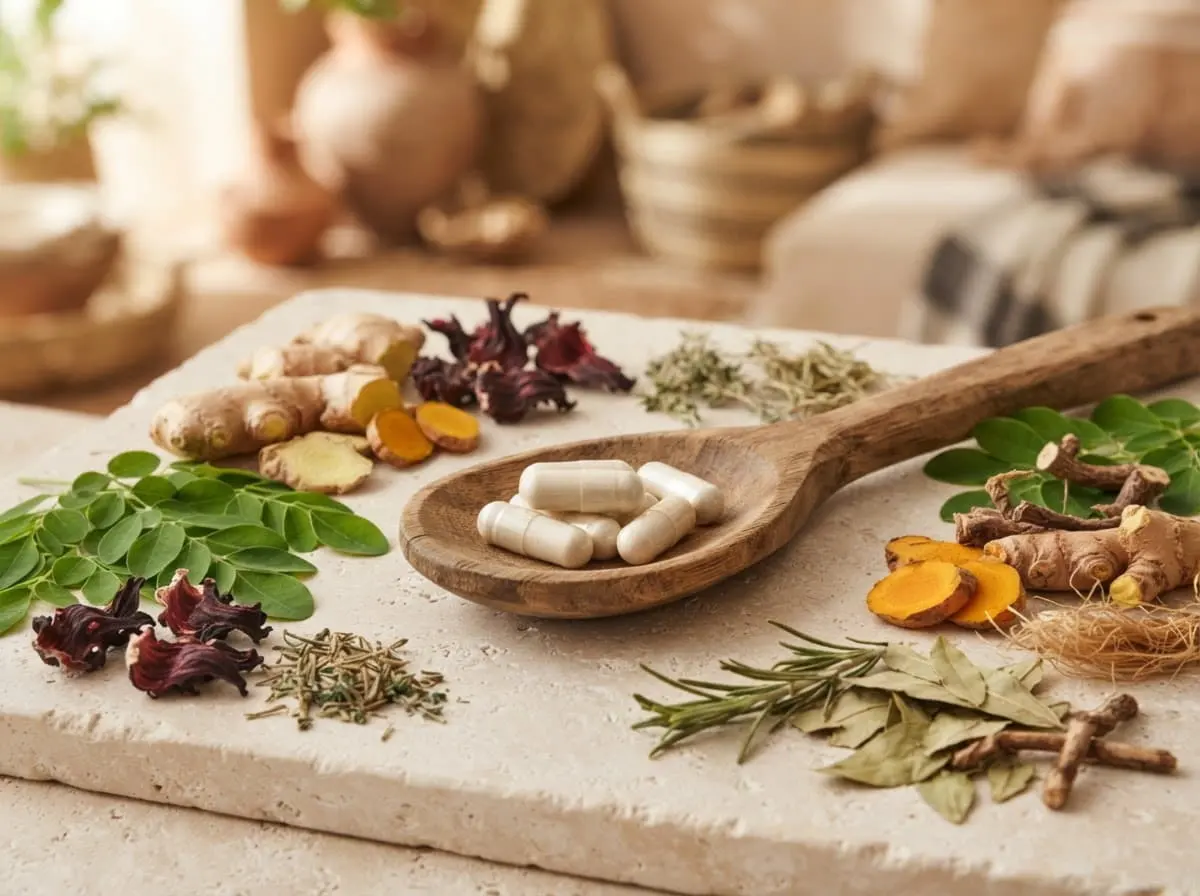
Hibiscus extract appears in blood pressure support and cardiovascular complexes, often with garlic, olive leaf or hawthorn. It is also sold as loose dried calyces for brewing.
Forms and sources
- Dried calyces for tea
- Standardised extract capsules
- Liquid concentrates
- Blended cardiovascular formulas
Safety
- Consumed as a beverage in large quantities across Africa with a long safety record.
- Because it may lower blood pressure slightly, people already on antihypertensive medication should monitor readings.
- Very strong daily preparations are not recommended in pregnancy.
Possible side effects
Mild stomach upset in some people; the acidity can affect sensitive teeth.
Interactions
May add to the effect of blood pressure medication and has been studied for effects on some drug levels, including certain antimalarials and paracetamol. Separate doses and consult a pharmacist.
Who should seek professional advice
People taking antihypertensive or diuretic medication, and anyone pregnant.
How to choose a supplement containing hibiscus
- For tea, look for whole dried calyces with a deep red colour and no dust.
- For capsules, check for a stated anthocyanin standardisation.
- Unsweetened preparations avoid the sugar load that comes with commercial zobo drinks.
Supplement categories using this ingredient
Related health topics
Frequently asked questions
Is zobo the same as hibiscus supplement?
It is the same plant material, brewed as a drink. A capsule gives you the hibiscus without the sugar that commercial zobo often carries.
How much hibiscus tea did the trials use?
Most trials used the equivalent of a few grams of dried calyx daily, brewed and taken once or twice a day over several weeks.
Related ingredients
References
- NCCIH — Herbs at a Glance
- NCCIH — Herbs at a Glance — US National Center for Complementary and Integrative Health: plain-language summaries of what is known about individual botanicals.
- NIH Office of Dietary Supplements — fact sheets — Nutrient-by-nutrient fact sheets with intake levels and interaction notes.
- How we choose sources
Medical disclaimer. BioMedic Africa publishes consumer health information and supplement research summaries. It is not a pharmacy, a clinic or a medicines regulator, and nothing here is a diagnosis, a prescription or a treatment plan. Dietary supplements are foods, not medicines: they are not intended to diagnose, treat, cure or prevent any disease. Speak with a pharmacist or a qualified healthcare professional before starting any supplement, especially if you are pregnant or breastfeeding, under 18, living with a long-term condition, or taking prescription medication.