
Kenya
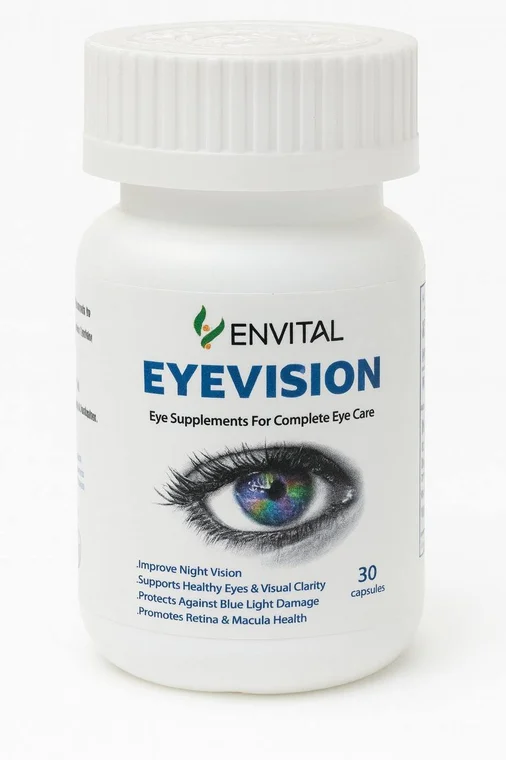
Envital Eyevision
Lutein, zeaxanthin, vitamins A, C, E and zinc for screen-tired eyes
KES 6,750
Order page
Supplement category
Eye supplements are built around lutein and zeaxanthin, the carotenoids the retina concentrates at its centre. Knowing what the AREDS2 formula contains makes it easy to choose the eye product that suits you.

Eye formulas combine lutein and zeaxanthin with zinc, copper, vitamin C and vitamin E, often adding omega-3, bilberry or astaxanthin.
The AREDS2 combination was tested in people with intermediate or advanced age-related macular degeneration and reduced progression risk in that group.
Formulas for everyday eye comfort and long screen days use the same carotenoids at everyday amounts.

Lutein is the yellow carotenoid the eye concentrates in the macula.
MineralZinc is an essential trace mineral with a real public-health story in sub-Saharan Africa, where dietary intake is often marginal.
VitaminVitamin C is the most-purchased single supplement in Africa and a daily essential the body cannot make for itself.
NutrientOmega-3 supplements bring the goodness of oily fish into a simple daily softgel.
Stated separately in milligrams, and comparable to the published formulation if that is your reason for buying.
AREDS2 replaced it with lutein and zeaxanthin; smokers and former smokers should choose a formula without it.
Formulas with higher zinc include copper to keep the two in balance.
Take the formula with a meal containing some fat, which helps carotenoid absorption, and keep regular eye examinations alongside.
Products documented from supplier material for African markets, each with its price, format and delivery terms.
Lutein, zeaxanthin, vitamins A, C, E and zinc for screen-tired eyes
KES 6,750
Order page
These products reach African buyers through chain pharmacies, supermarket health aisles, online pharmacies, marketplaces and direct-order delivery. Each channel differs in price, choice, advice and accountability — our where to buy guide compares them, and the Kenya guide covers that market in detail.
Many people take lutein and zeaxanthin to top up intake when leafy greens are rarely on the plate. Keep regular eye examinations alongside, and follow your eye specialist’s advice if you have a diagnosis.
Regular breaks, good lighting and up-to-date spectacles, together with leafy greens or a daily lutein formula.
Medical disclaimer. BioMedic Africa publishes consumer health information and supplement research summaries. It is not a pharmacy, a clinic or a medicines regulator, and nothing here is a diagnosis, a prescription or a treatment plan. Dietary supplements are foods, not medicines: they are not intended to diagnose, treat, cure or prevent any disease. Speak with a pharmacist or a qualified healthcare professional before starting any supplement, especially if you are pregnant or breastfeeding, under 18, living with a long-term condition, or taking prescription medication.