
Kenya
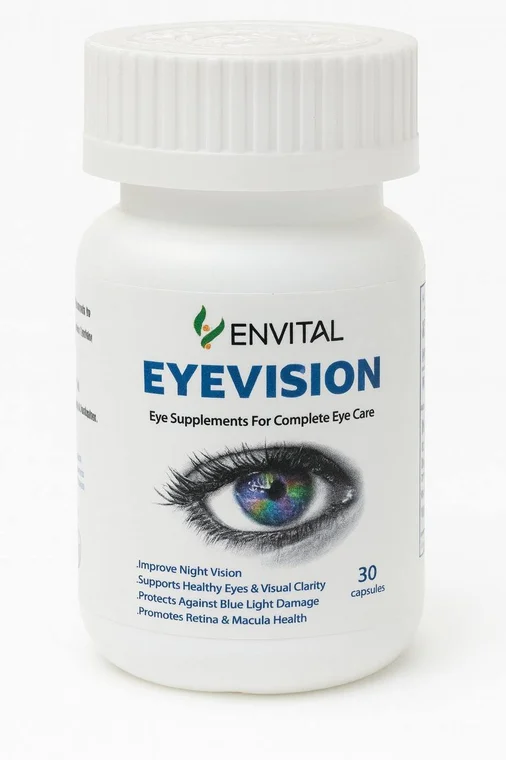
Envital Eyevision
Lutein, zeaxanthin, vitamins A, C, E and zinc for screen-tired eyes
KES 6,750
Order page
Nutrient ingredient
Also known as Lutein and zeaxanthin, macular carotenoids
Lutein is the yellow carotenoid the eye concentrates in the macula. It is one of the clearest examples of a supplement ingredient with a defined biological role, which is why it is the cornerstone of modern eye-wellbeing formulas.

Lutein and its partner zeaxanthin are dietary carotenoids found in dark leafy greens, egg yolk, maize and marigold flowers. The retina actively accumulates them in the macula.
Commercial lutein is usually extracted from marigold (Tagetes erecta) and supplied as free lutein or lutein esters.
Dark leafy greens such as sukuma wiki, amaranth and cowpea leaves are staple African vegetables and natural dietary sources. Isolated lutein supplements are a modern development.
Good to know. Supplements containing lutein are food supplements, so their labels describe support for everyday wellbeing.
The large AREDS2 trial studied lutein and zeaxanthin as part of a defined nutrient combination for older adults’ eye health, and it shaped the eye formulas sold today.
Because the retina actively gathers lutein, a steady daily intake from leafy greens and a well-formulated supplement go hand in hand.

Lutein appears in eye health formulas, usually with zeaxanthin, zinc, vitamin C, vitamin E and sometimes bilberry or astaxanthin.
Rare. Skin yellowing at very high intakes is the main reported effect.
No significant documented drug interactions.
Anyone with diagnosed eye disease should follow ophthalmological advice rather than self-selecting a formula, since the studied combinations are specific.
Products documented in African markets whose supplier material names this ingredient.
Lutein, zeaxanthin, vitamins A, C, E and zinc for screen-tired eyes
KES 6,750
Order pageThe eye concentrates lutein in the macula, the part of the retina used for sharp central vision. Eye formulas combine it with zeaxanthin, zinc and vitamins C and E, following the combination studied in AREDS2.
Dark leafy greens are a good source, and a diet rich in them supplies meaningful amounts. A supplement adds a steady, measured daily amount on top.
Medical disclaimer. BioMedic Africa publishes consumer health information and supplement research summaries. It is not a pharmacy, a clinic or a medicines regulator, and nothing here is a diagnosis, a prescription or a treatment plan. Dietary supplements are foods, not medicines: they are not intended to diagnose, treat, cure or prevent any disease. Speak with a pharmacist or a qualified healthcare professional before starting any supplement, especially if you are pregnant or breastfeeding, under 18, living with a long-term condition, or taking prescription medication.