
Kenya
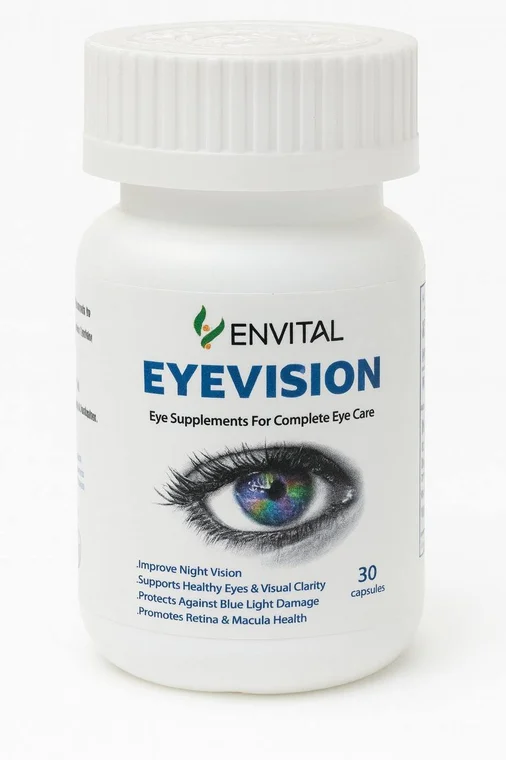
Envital Eyevision
Lutein, zeaxanthin, vitamins A, C, E and zinc for screen-tired eyes
KES 6,750
Order page
Health topic
Eye supplements are built around lutein and zeaxanthin, the carotenoids the retina concentrates in its centre. This page explains what they contribute, the AREDS2 formula behind many eye products, and the habits that look after your vision.

The retina concentrates the carotenoids lutein and zeaxanthin in its central region, the macula. This is the biological basis for eye supplements.
The AREDS and AREDS2 trials tested defined nutrient combinations in people with intermediate or advanced age-related macular degeneration, which is why their lutein-and-zinc formula is the reference point for eye nutrition.
The leading causes of avoidable vision loss across Africa are cataract, uncorrected refractive error, glaucoma and diabetic retinopathy. All are found at an eye examination, which is why a regular check sits alongside any eye formula.
Usually refractive change or cataract. An optometrist can resolve the question quickly.
A specific warning sign for macular problems that needs prompt ophthalmological assessment.
Related to focusing effort, blinking rate and lighting more than to nutrition.
Anyone with diabetes needs regular retinal screening regardless of symptoms.

Sukuma wiki, amaranth, spinach and cowpea leaves are excellent natural sources of lutein and zeaxanthin.
Cumulative UV exposure contributes to cataract, and equatorial regions have high UV levels.
Regular breaks and conscious blinking reduce strain and dryness.
A major modifiable risk factor for macular degeneration and cataract.
Lutein, zeaxanthin, zinc, copper, vitamin C and vitamin E form the studied AREDS2 combination. Vitamin A deficiency remains a cause of childhood blindness in parts of the region and is addressed through public health programmes.
Ingredients that appear in products aimed at this topic. Each page explains what the ingredient is, how it is traditionally used and which products contain it.
Lutein is the yellow carotenoid the eye concentrates in the macula.
MineralZinc is an essential trace mineral with a real public-health story in sub-Saharan Africa, where dietary intake is often marginal.
VitaminVitamin C is the most-purchased single supplement in Africa and a daily essential the body cannot make for itself.
NutrientOmega-3 supplements bring the goodness of oily fish into a simple daily softgel.

See a doctor about any of the following before starting a supplement:
Eye supplements are built around lutein and zeaxanthin, the carotenoids the retina concentrates at its centre.
Vitamins are essential compounds the body needs every day from food.
Minerals are inorganic elements the body needs in defined amounts, and their supplements are judged on one number the front of the pack rarely shows: elemental content.
Products sold in African markets positioned around this topic, each with its price, format and delivery terms.
Lutein, zeaxanthin, vitamins A, C, E and zinc for screen-tired eyes
KES 6,750
Order pagePeople who want to top up lutein and zeaxanthin when leafy greens are rarely on the plate, and people with macular degeneration on their eye specialist’s advice. Regular eye examinations go alongside.
Regular breaks, good lighting and up-to-date spectacles, together with a diet rich in leafy greens or a daily lutein formula.
This page summarises public health information. These are the bodies it draws on — go to them directly if you want the full text rather than our summary.
Medical disclaimer. BioMedic Africa publishes consumer health information and supplement research summaries. It is not a pharmacy, a clinic or a medicines regulator, and nothing here is a diagnosis, a prescription or a treatment plan. Dietary supplements are foods, not medicines: they are not intended to diagnose, treat, cure or prevent any disease. Speak with a pharmacist or a qualified healthcare professional before starting any supplement, especially if you are pregnant or breastfeeding, under 18, living with a long-term condition, or taking prescription medication.