
Botanical ingredient
Baobab: What It Is, What It Brings and How to Choose a Supplement
Adansonia digitata · Also known as Mbuyu (Swahili), monkey bread fruit

Baobab fruit powder is a naturally dry, vitamin C-rich African ingredient that needs no processing to become a supplement. It is one of the few botanicals where the local product is the premium product.
What is baobab?
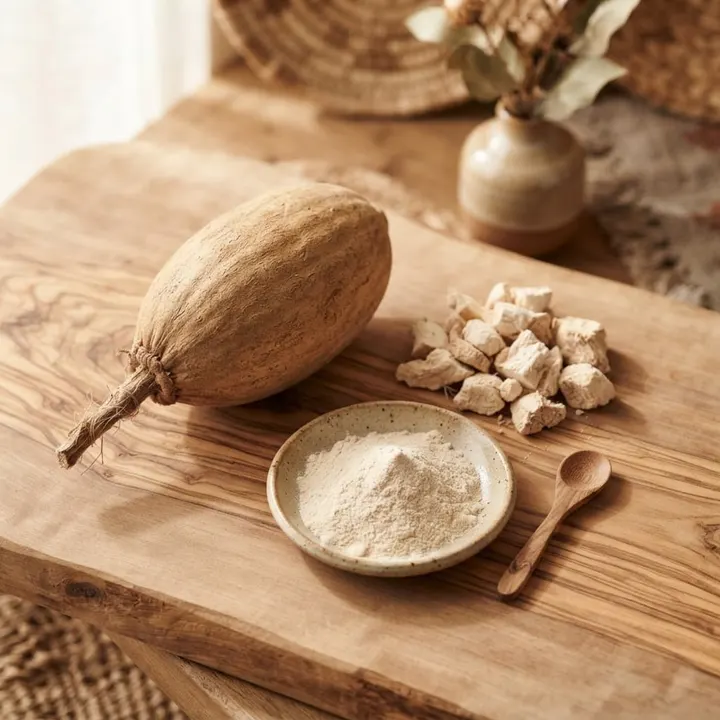
Baobab is the fruit of Adansonia digitata, the iconic tree of African savannah landscapes. The fruit pulp dries naturally inside the pod, so the powder requires only milling and sieving.
The pulp is high in vitamin C and soluble fibre and contains potassium, calcium and magnesium. It has a tart, citrus-like flavour.
Traditional and regional use
Baobab pulp is used across the Sahel and East Africa in drinks, porridges and sweets, and mbuyu seeds coated in sugar are a familiar Kenyan coastal snack. It is a food first and a supplement second.
What is baobab known for?
Good to know. Supplements containing baobab are food supplements, so their labels describe support for everyday wellbeing.
The nutrient content of baobab pulp is well characterised, and its vitamin C and fibre contributions are the clearest basis for its use.
Human studies have examined baobab’s effects on the glycaemic response to meals and on digestion, with consistent findings linked to its soluble fibre.
How is it used in supplements?
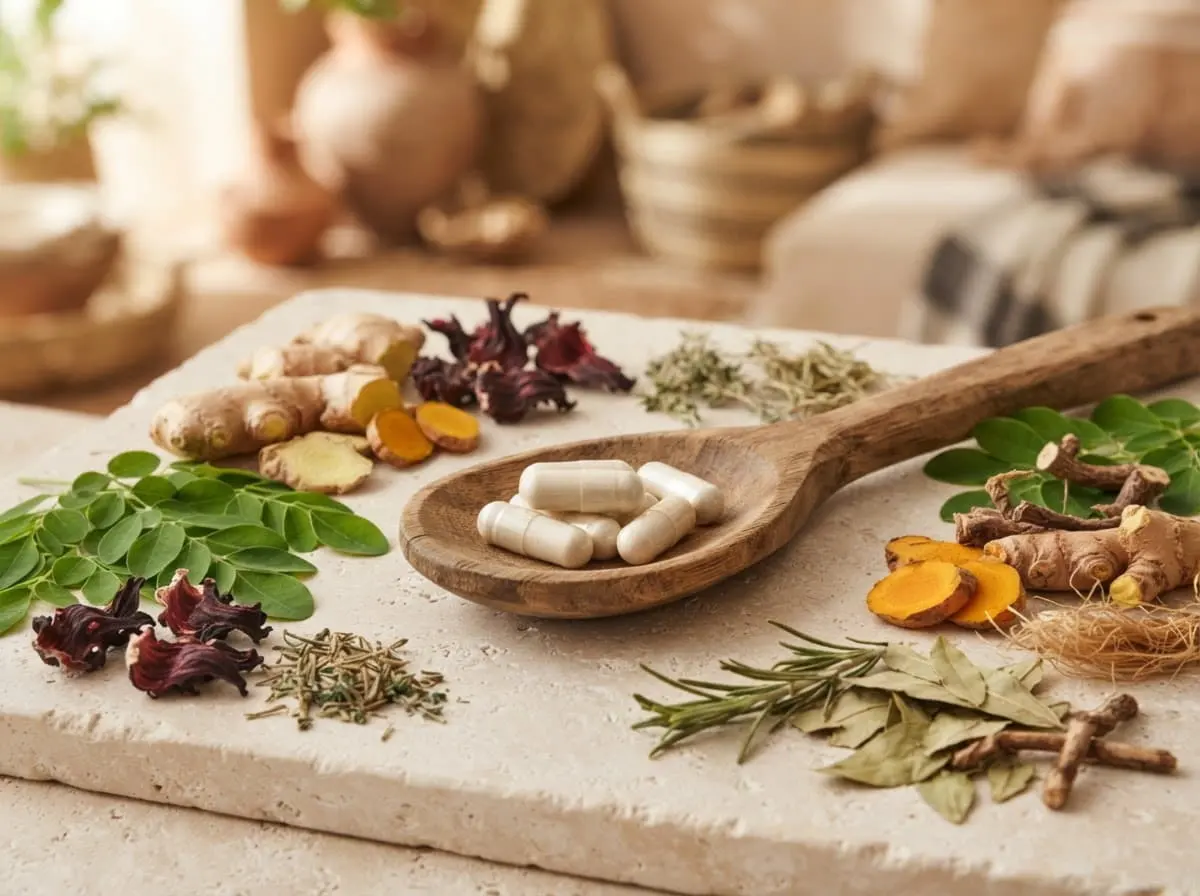
Baobab is sold as a standalone fruit powder and as a component of greens, immune and digestive blends. It is also widely used as a natural souring and flavouring agent.
Forms and sources
- Fruit pulp powder
- Capsules
- Blended drink powders
- Baobab seed oil (topical)
Safety
- Eaten as a food across Africa with a long history of safe consumption.
- High fibre content means large amounts may cause bloating.
- Products should be milled and packed hygienically; buy from a seller who states processing standards.
Possible side effects
Bloating or loose stools at high intakes, mainly from the fibre.
Interactions
No well-documented drug interactions. Its fibre may slow absorption of medicines taken at the same moment; separate doses by an hour or two.
Who should seek professional advice
People with digestive conditions who are sensitive to fibre changes.

How to choose a supplement containing baobab
- Baobab powder should be off-white to pale pink and dry, never clumped.
- Check for a stated origin and packing date.
- A vitamin C content per serving on the label helps you compare it with other sources.
Supplement categories using this ingredient
Related health topics
Frequently asked questions
How much vitamin C does baobab contain?
Published analyses put baobab pulp among the richer plant sources of vitamin C; the exact value varies by tree, region and storage, and the pack states the amount per serving.
Is baobab a laxative?
It is high in soluble fibre, which supports normal bowel regularity in a gentle, food-like way. It is not a stimulant laxative.
Related ingredients
References
- NIH ODS — Vitamin C
- NCCIH — Herbs at a Glance — US National Center for Complementary and Integrative Health: plain-language summaries of what is known about individual botanicals.
- NIH Office of Dietary Supplements — fact sheets — Nutrient-by-nutrient fact sheets with intake levels and interaction notes.
- How we choose sources
Medical disclaimer. BioMedic Africa publishes consumer health information and supplement research summaries. It is not a pharmacy, a clinic or a medicines regulator, and nothing here is a diagnosis, a prescription or a treatment plan. Dietary supplements are foods, not medicines: they are not intended to diagnose, treat, cure or prevent any disease. Speak with a pharmacist or a qualified healthcare professional before starting any supplement, especially if you are pregnant or breastfeeding, under 18, living with a long-term condition, or taking prescription medication.