

Kenya
Slimora
Cleanse and weight management capsules taken before meals, pay on delivery
KES 6,750
Order page
Health topic
Digestive complaints are among the most common reasons people buy supplements, and among the areas where diet does most of the work. This guide covers fibre, traditional fermented foods, probiotic strains and the symptoms that need a doctor.

The digestive tract is home to a large microbial community whose composition is shaped mainly by what you eat. Fibre from legumes, whole grains, vegetables and fruit is its primary fuel.
Traditional African diets built on beans, whole maize, millet, sorghum, leafy greens and fermented preparations are naturally supportive of digestive health. Refined staples and low vegetable intake move things in the other direction.
Probiotic supplements supply named live cultures. The strain on the label tells you what a formula is built for, and a course of antibiotics is one of the best-known times to take one.
Usually responds well to fibre, fluid and activity, with a fibre supplement as a convenient top-up. Persistent change in bowel habit needs medical review.
Common and often dietary. Sudden new bloating in an adult over fifty should be assessed.
The best-known time to take a probiotic, using specific named strains.
Frequent symptoms deserve assessment rather than indefinite self-treatment.

Beans, lentils, whole grains and vegetables are the everyday foundation, and a fibre supplement tops up days when they are missing.
Mursik, amabere, ogi, fura da nono and mahewu are traditional live-culture foods with a long regional history.
Fibre without adequate fluid worsens constipation rather than relieving it.
Irregular eating and very large late meals aggravate reflux and bloating.
Fibre is the central nutrient here, in both soluble and insoluble forms. Adequate fluid, and in some cases magnesium, support normal bowel function. Vitamin B12 and iron absorption can be affected by digestive conditions, which is why persistent symptoms deserve investigation.
Ingredients that appear in products aimed at this topic. Each page explains what the ingredient is, how it is traditionally used and which products contain it.
Probiotics are friendly live cultures that carry on Africa’s long tradition of fermented foods in a convenient capsule.
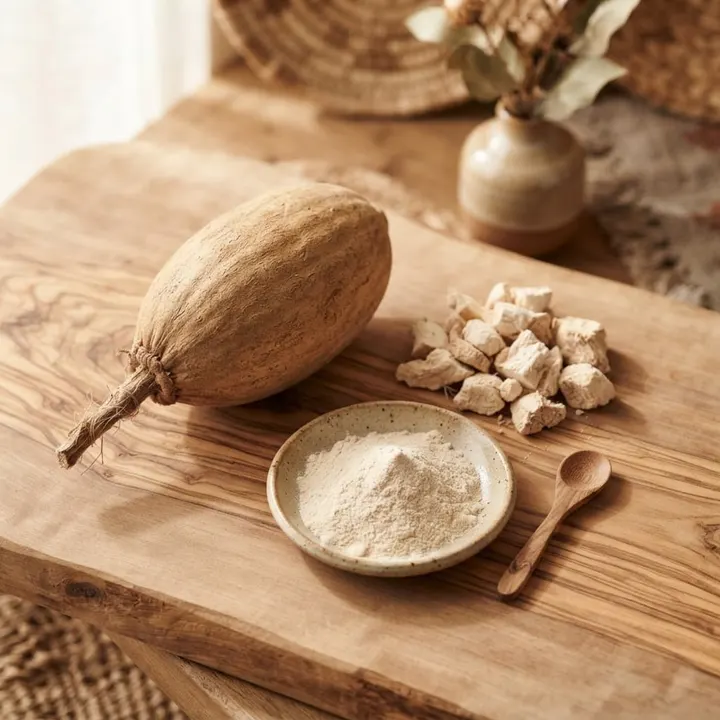
BotanicalBaobab fruit powder is a naturally dry, vitamin C-rich African ingredient that needs no processing to become a supplement.
BotanicalGinger is one of the few botanicals that is both an everyday African kitchen staple and a genuinely well-studied supplement ingredient.
BotanicalDandelion root is a bitter herb used for centuries as a digestive and diuretic tonic.
BotanicalBurdock root is eaten as a vegetable in East Asia and used as a traditional bitter in European and Asian herbal practice.
BotanicalMoringa is the most important home-grown supplement ingredient in Africa.
See a doctor about any of the following before starting a supplement:

The digestive shelf holds several different product types — fibre, probiotics, enzymes and herbal formulas.
Probiotics are defined by their named strains.
Herbal supplements bring Africa’s traditional plant heritage into a measured, convenient daily form.
Products sold in African markets positioned around this topic, each with its price, format and delivery terms.
Cleanse and weight management capsules taken before meals, pay on delivery
KES 6,750
Order page
Herbal cleanse capsules for digestive comfort and a lighter feeling
KES 6,750
Order page
One-a-day herbal capsule with wormwood, turmeric, gotu kola, amla and celery
KES 6,100
Order page One herbal capsule a day with wormwood, turmeric, gotu kola, amla and celery
TZS 91,900
Order pageDuring and after a course of antibiotics, or when your diet is low in fermented foods. Choose a named strain for your purpose and take it daily.
Follow the course on the pack, drink plenty of water and keep meals rich in fibre. Stimulant laxatives are not for regular use, and any persistent change in bowel habit deserves a doctor’s check.
This page summarises public health information. These are the bodies it draws on — go to them directly if you want the full text rather than our summary.
Medical disclaimer. BioMedic Africa publishes consumer health information and supplement research summaries. It is not a pharmacy, a clinic or a medicines regulator, and nothing here is a diagnosis, a prescription or a treatment plan. Dietary supplements are foods, not medicines: they are not intended to diagnose, treat, cure or prevent any disease. Speak with a pharmacist or a qualified healthcare professional before starting any supplement, especially if you are pregnant or breastfeeding, under 18, living with a long-term condition, or taking prescription medication.