

Botanical ingredient
Cinnamon: What It Is, What It Brings and How to Choose a Supplement
Cinnamomum verum / Cinnamomum cassia · Also known as Mdalasini (Swahili), cassia, Ceylon cinnamon
Cinnamon is a much-loved warming spice and a classic ingredient in blood-sugar support formulas. Knowing its two commercial species — Ceylon and cassia — helps you enjoy it daily at the right amount.

What is cinnamon?
Cinnamon is the inner bark of Cinnamomum trees. Ceylon cinnamon (C. verum) is pale, layered and delicate; cassia (C. cassia and related species) is darker, harder and far more common in supplements and supermarket powder.
Cassia contains substantially more coumarin, a compound with a defined tolerable daily intake, which makes species identification a practical safety issue rather than a technicality.
Traditional and regional use
Mdalasini is a fixture of Swahili coastal cooking, chai and spice blends, and its dietary use across East Africa is long-standing. Blood-sugar support formulas bring that familiar spice into a measured daily capsule.
What is cinnamon known for?
Good to know. Supplements containing cinnamon are food supplements, so their labels describe support for everyday wellbeing.
Cinnamon has been studied in many trials in connection with fasting glucose and HbA1c, and several meta-analyses report favourable effects.
That research interest is why cinnamon is a regular partner of chromium and fenugreek in blood-sugar support blends.
As a food supplement, cinnamon accompanies a balanced diet and any treatment a doctor has prescribed.
How is it used in supplements?
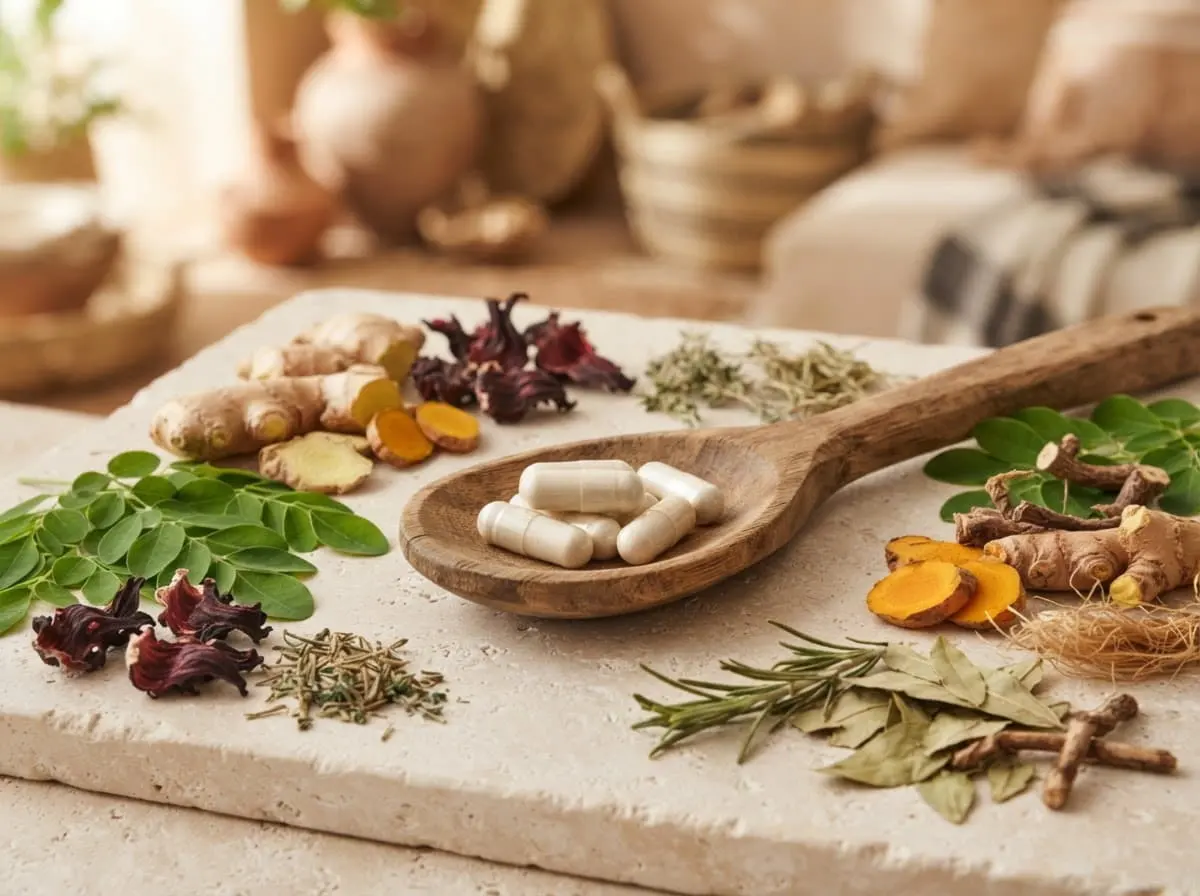
Cinnamon extract appears in blood sugar support and metabolic formulas, frequently alongside chromium, berberine-type ingredients or fenugreek.
Forms and sources
- Cassia bark powder capsules
- Ceylon cinnamon powder
- Aqueous cinnamon extracts
- Culinary sticks and ground spice
Safety
- Culinary use is safe for most people.
- Daily supplement-level cassia intake can exceed coumarin guidance; Ceylon cinnamon is much lower in coumarin.
- Cinnamon oil is not the same as bark powder and should not be swallowed.
Possible side effects
Mouth irritation, digestive upset, and in sensitive people allergic reactions.
Interactions
Relevant with diabetes medication because of possible additive glucose effects, and with medicines processed by the liver at high coumarin intakes.
Who should seek professional advice
People taking diabetes medication, people with liver conditions, and anyone pregnant.
How to choose a supplement containing cinnamon
- Look for the botanical species on the label, and prefer Cinnamomum verum for daily supplement use.
- Check whether the product is an aqueous extract, which is lower in coumarin.
- Never stop or reduce prescribed glucose medication because you started a cinnamon supplement.
Products containing cinnamon
Products documented in African markets whose supplier material names this ingredient.
Supplement categories using this ingredient
Related health topics
Frequently asked questions
Is supermarket cinnamon Ceylon or cassia?
In most markets it is cassia unless the pack says otherwise. Ceylon cinnamon is usually labelled and priced accordingly.
Can cinnamon replace diabetes medication?
No. Cinnamon is a food supplement that accompanies your treatment. Keep taking prescribed medicines and never change them without your doctor.
Related ingredients
References
- NCCIH — Herbs at a Glance
- NCCIH — Herbs at a Glance — US National Center for Complementary and Integrative Health: plain-language summaries of what is known about individual botanicals.
- NIH Office of Dietary Supplements — fact sheets — Nutrient-by-nutrient fact sheets with intake levels and interaction notes.
- How we choose sources
Medical disclaimer. BioMedic Africa publishes consumer health information and supplement research summaries. It is not a pharmacy, a clinic or a medicines regulator, and nothing here is a diagnosis, a prescription or a treatment plan. Dietary supplements are foods, not medicines: they are not intended to diagnose, treat, cure or prevent any disease. Speak with a pharmacist or a qualified healthcare professional before starting any supplement, especially if you are pregnant or breastfeeding, under 18, living with a long-term condition, or taking prescription medication.