

Kenya
Prostcare
Saw palmetto, lycopene, green tea and turmeric capsules for men’s urinary comfort
KES 4,999
Order page
Botanical ingredient
Serenoa repens · Also known as Serenoa, dwarf palm berry
Saw palmetto is the best-known plant in men’s prostate-comfort formulas worldwide, used for generations and backed by one of the largest research records of any herb.

Saw palmetto is the fruit of Serenoa repens, a small palm native to the south-eastern United States. Supplements use a lipidosterolic extract of the berry.
The extract concentrates fatty acids and sterols; standardisation is usually expressed as a percentage of total fatty acids, commonly 85–95 %.
Saw palmetto berries were eaten by Native Americans in the south-eastern United States and later adopted into Western herbal practice for men’s urinary comfort. It reaches Africa as an imported extract in men’s health formulas.
Good to know. Supplements containing saw palmetto are food supplements, so their labels describe support for everyday wellbeing.
Saw palmetto has been studied in numerous randomised trials for men’s urinary comfort as the prostate changes with age.
Studies of specific standardised extracts, including hexane extracts, have reported favourable results, which is why quality formulas state the extract type.
It is at its best as part of daily use, taken as a course over weeks and months.

Saw palmetto anchors most prostate formulas, usually alongside pumpkin seed oil, nettle root, lycopene, zinc and selenium.
Stomach discomfort, nausea, headache. Rare reports of liver and pancreatic effects exist.
Possible additive effects with anticoagulants; may theoretically interact with hormonal medicines. It can also affect PSA test interpretation, which your doctor needs to know.
Any man over 45 with urinary symptoms should be assessed medically first. Anyone due a PSA test should mention saw palmetto use.

Products documented in African markets whose supplier material names this ingredient.
Saw palmetto, lycopene, green tea and turmeric capsules for men’s urinary comfort
KES 4,999
Order page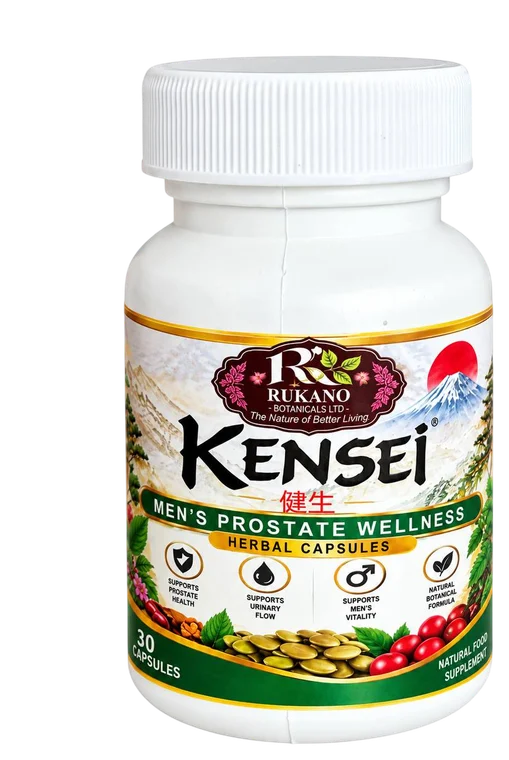
Saw palmetto, pumpkin seed and pygeum capsules for men’s prostate wellness
KES 6,480
Order pageTrials have measured urinary symptom scores over weeks and months, which is why saw palmetto formulas are taken as a course rather than judged in a few days.
Tell your doctor you take it. Some prostate ingredients can influence how results are interpreted, and your clinician needs the full picture.
Medical disclaimer. BioMedic Africa publishes consumer health information and supplement research summaries. It is not a pharmacy, a clinic or a medicines regulator, and nothing here is a diagnosis, a prescription or a treatment plan. Dietary supplements are foods, not medicines: they are not intended to diagnose, treat, cure or prevent any disease. Speak with a pharmacist or a qualified healthcare professional before starting any supplement, especially if you are pregnant or breastfeeding, under 18, living with a long-term condition, or taking prescription medication.