
Health guide
Fibre and African Staples: Why the Traditional Plate Was Already Right

Traditional African diets were among the highest-fibre in the world, and the research showing what that does for the gut was partly done on this continent. Refined staples changed the picture; a fibre-rich plate, with a fibre supplement where it helps, brings it back.

What fibre does
Soluble fibre dissolves and forms a gel, slowing carbohydrate absorption and binding bile acids. Insoluble fibre adds bulk and speeds transit. Both feed gut bacteria, which ferment them into short-chain fatty acids that nourish the colon lining.
This is why fibre appears in guidance on digestion, blood glucose, cholesterol and bowel health simultaneously — one dietary component with several distinct roles.
The African research
Some of the most influential research linking dietary fibre to bowel health came from comparisons between rural African populations eating high-fibre traditional diets and Western populations eating refined ones.
Later work comparing rural African and African-American diets found measurable changes in colon biomarkers within weeks of swapping diets — an unusually direct demonstration that this is about food rather than genetics.
What refined staples changed
Sifted maize meal, white rice and white bread contain far less fibre than whole-grain equivalents. As urban diets shifted towards them, and as legumes and leafy vegetables were displaced by convenience foods, average fibre intake fell.
The nutrition transition across African cities is visible in exactly this pattern, and it tracks with rising rates of type 2 diabetes and cardiovascular disease.
Getting it back from food
Whole-grain maize meal instead of sifted, more beans and cowpeas, more leafy greens, sweet potato with its skin, groundnuts, and fruit such as guava and pawpaw all raise fibre substantially without any special purchase.
Increase gradually and with plenty of fluid. A sudden jump can cause bloating and wind, and a steady build-up avoids it.
- Whole or lightly sifted maize meal rather than fine white flour
- Beans, cowpeas, green grams and lentils several times a week
- Sukuma wiki, amaranth, cowpea leaves and pumpkin leaves
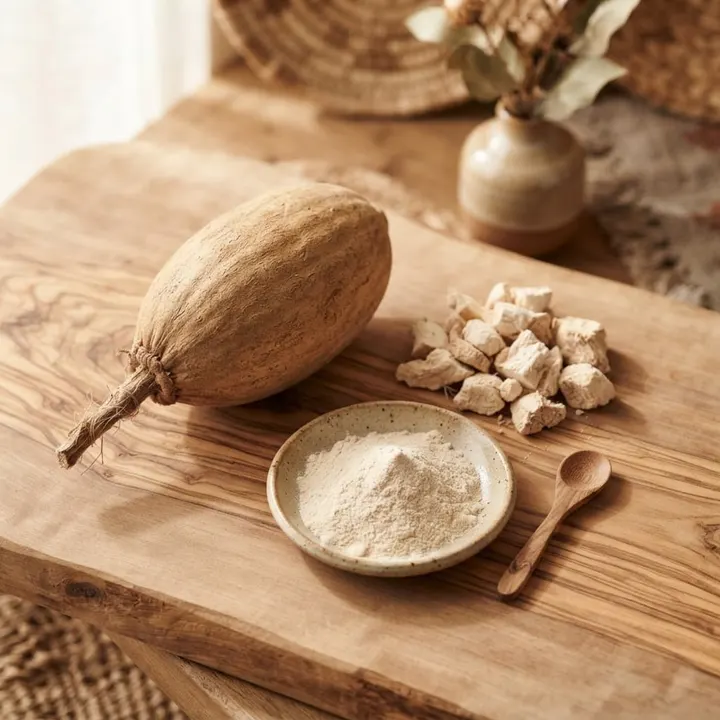
- Fruit with edible skins, and baobab powder as a natural fibre source

Where a fibre supplement fits
Psyllium and glucomannan are the best-known fibre supplements and suit specific situations — constipation that has not responded to dietary change, or a wish to slow carbohydrate absorption at a meal.
They pair best with fibre-rich food, which also brings vitamins, minerals and polyphenols. Take them with plenty of water.

Frequently asked questions
How much fibre do I need?
General guidance for adults sits around 25–30 g a day. A plate with beans, greens and a whole-grain staple reaches that comfortably.
Why does fibre make me bloated?
Usually because intake rose too quickly. Increase gradually over a few weeks and drink enough fluid.
Related guides
Continue reading
Digestive health
Health topicBlood sugar support
CategoryDigestive health supplements
CategoryProbiotics
Medical disclaimer. BioMedic Africa publishes consumer health information and supplement research summaries. It is not a pharmacy, a clinic or a medicines regulator, and nothing here is a diagnosis, a prescription or a treatment plan. Dietary supplements are foods, not medicines: they are not intended to diagnose, treat, cure or prevent any disease. Speak with a pharmacist or a qualified healthcare professional before starting any supplement, especially if you are pregnant or breastfeeding, under 18, living with a long-term condition, or taking prescription medication.