
Health guide
How to Read a Supplement Label: Every Line Explained

A supplement label holds everything you need to choose and use a product well. Learn to read four specific parts of it and you can understand almost any pack in about ninety seconds, anywhere in the region.

The serving size line
Everything else on the label is expressed per serving, so this is the first line to find. A serving may be one capsule, two, or a scoop.
A pack of sixty capsules with a two-capsule serving is a thirty-day supply. Knowing this helps you compare packs fairly and plan a full course.
The amount per serving column
For vitamins and minerals, this gives a weight in milligrams or micrograms and often a percentage of a reference intake. For minerals specifically, look for the elemental amount: 500 mg of magnesium oxide supplies roughly 300 mg of magnesium.
For botanicals, look for either a plain weight of dried plant material or an extract with a ratio such as 10:1. A 300 mg 10:1 extract is not the same as 300 mg of powder — it represents 3 g of raw material.
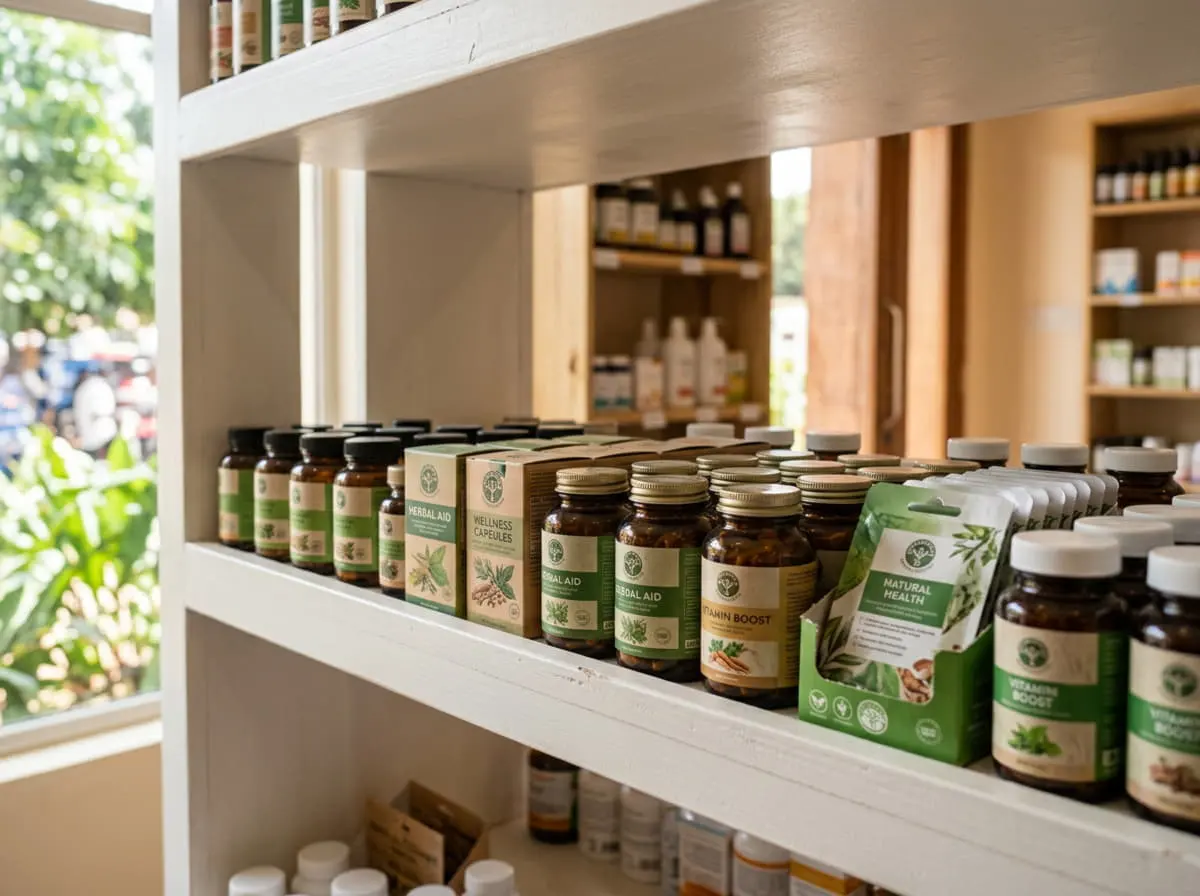
The form of each ingredient
Form shapes absorption and comfort. Vitamin D3 raises blood levels more effectively than D2. Magnesium glycinate is gentle on the stomach. Calcium citrate absorbs without stomach acid, while carbonate is best taken with a meal.
For herbal ingredients, the botanical name and plant part are the equivalent detail. Moringa leaf and moringa root are different materials, and supplements use the leaf.
Blends and combination formulas
Many formulas combine several ingredients chosen to work together, listed as a blend with one total weight. This keeps the whole recipe in a single daily capsule.
The composition is printed on the pack. When you order through the seller’s order page, the adviser can read the ingredient list out on the confirmation call, which also helps if you want to check it against medicines you already take.

The rest of the pack
A complete label also carries a batch or lot number, an expiry date, storage instructions, the manufacturer or importer name, and any national registration number required in your country.
These details make the pack easy to use and easy to track: the batch and expiry tell you the product is fresh, and the storage line tells you how to keep it at its best in a warm climate.
- Batch or lot number and expiry date, legibly printed
- Manufacturer or importer name and address
- NAFDAC number in Nigeria, FDA registration in Ghana
- The prescribed complementary medicine disclaimer in South Africa
- Storage instructions — relevant everywhere in a hot climate
The mandatory lines at the bottom of the label
Every pack ends with the same short block: the words “food supplement”, the recommended daily dose not to be exceeded, advice to keep the product out of reach of children and the storage conditions. Follow the directions, and if you take prescribed medicine, show the pack to your pharmacist.
The purpose wording on the front — “supports”, “contributes to”, “helps maintain” — is explained phrase by phrase in our supplement wording guide.

Frequently asked questions
What does a 10:1 extract mean?
Ten parts of raw plant material produced one part of extract. So 300 mg of a 10:1 extract represents 3 g of the original herb, concentrated.
Are combination formulas better than single ingredients?
They serve different purposes. A single-ingredient product focuses on one nutrient or plant; a combination formula brings several complementary ingredients together in one daily dose. Choose the one that matches your goal.
Related guides
How to choose a dietary supplement
Checking ingredients for allergies and medicines
How to compare supplement brands
Continue reading
Medical disclaimer. BioMedic Africa publishes consumer health information and supplement research summaries. It is not a pharmacy, a clinic or a medicines regulator, and nothing here is a diagnosis, a prescription or a treatment plan. Dietary supplements are foods, not medicines: they are not intended to diagnose, treat, cure or prevent any disease. Speak with a pharmacist or a qualified healthcare professional before starting any supplement, especially if you are pregnant or breastfeeding, under 18, living with a long-term condition, or taking prescription medication.