
Health guide
Capsules, Tablets, Powders and Gummies: Which Format Is Right?

Format is not a cosmetic choice. It changes how much active ingredient a product can carry, how fast it dissolves, how well it keeps in a hot climate and how much you pay per gram.

Tablets
Tablets are compressed powder, sometimes coated. They carry more active ingredient per unit than capsules and are economical to produce, which is why calcium and magnesium products are usually tablets.
The trade-off is size: large tablets can be difficult for some people to swallow, and a well-made tablet is designed to break down properly in the stomach.
Capsules
Capsules hold powder or oil inside a shell of gelatine or vegetable cellulose. They dissolve reliably, mask taste well and suit oils and moisture-sensitive ingredients.
They hold less material than a tablet of the same size, which is why high-dose mineral products rarely use them. Gelatine shells are animal-derived, which matters for dietary and religious requirements.

Powders
Powders are the most economical format per gram and allow flexible dosing, which suits protein, collagen, MSM and fibre products where daily amounts are measured in grams.
They need mixing and absorb moisture in humid conditions, so keep the lid tightly closed.
Liquids, softgels and gummies
Liquids and drops suit children, older adults with swallowing difficulty, and fat-soluble vitamins. They usually have shorter shelf lives once opened.
Softgels are ideal for oils such as omega-3 and vitamin D. Gummies are pleasant to take, usually carry fewer nutrients per piece, often leave out minerals, and contain some sugar.
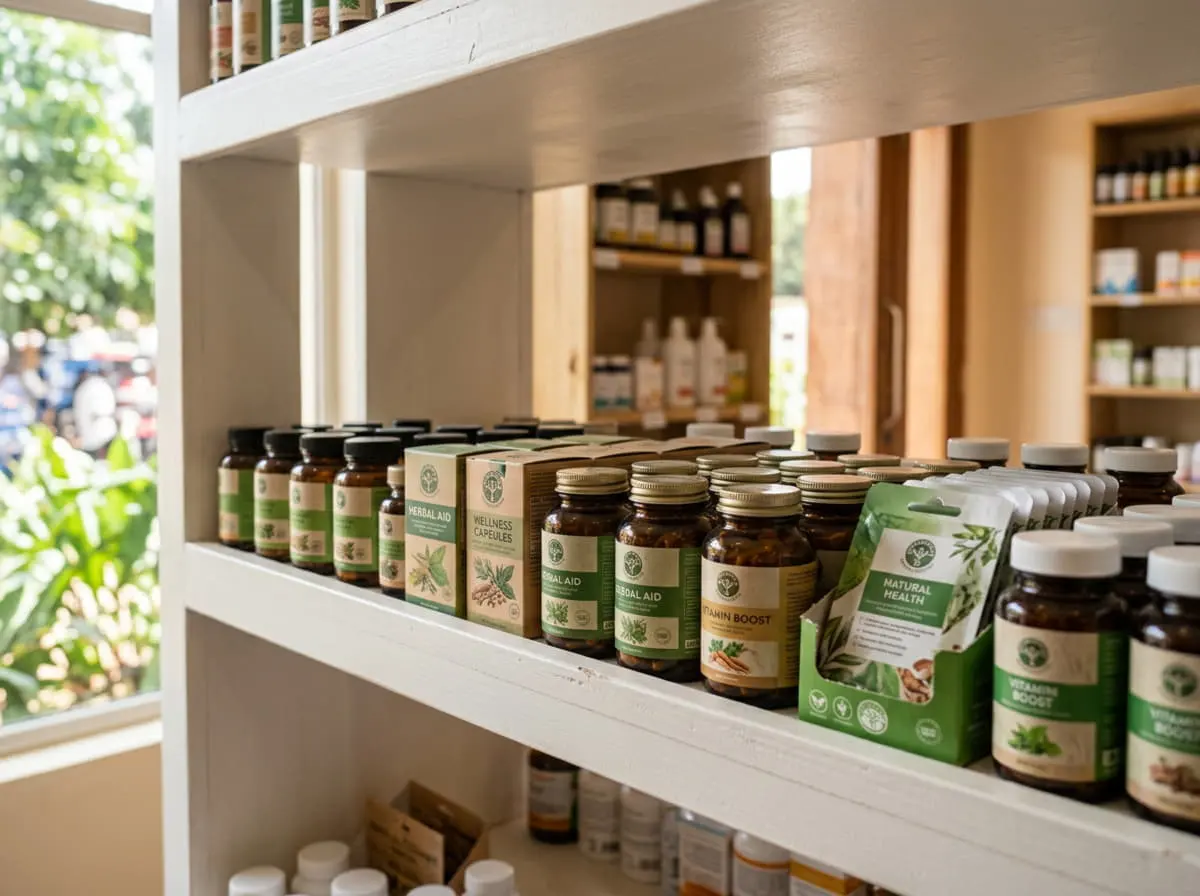
Format in a hot climate
This matters in a warm region. Heat and humidity affect supplements, and gummies in particular soften and stick together.
Sealed blister packs protect well in humid conditions. Probiotics are sensitive to heat. Oils oxidise. Storing supplements away from windows, cookers and bathrooms keeps them at their best.
- Blister packs over large bottles in humid conditions
- A cool, dark cupboard rather than a windowsill or fridge door
- Tightly resealed powders, with the desiccant left in
- Shelf-stable probiotics unless you have reliable refrigeration

Frequently asked questions
Do capsules absorb better than tablets?
Capsules disintegrate reliably, and a well-made tablet performs equivalently. Format matters less than dose and chemical form.
Can I open a capsule and mix it with food?
Often yes for plain powder capsules, but not for delayed-release or enteric-coated products, where the coating is doing a job. Ask a pharmacist.
Related guides
How to read a supplement label
Supplement storage in hot climates
How to choose a dietary supplement
Continue reading
Medical disclaimer. BioMedic Africa publishes consumer health information and supplement research summaries. It is not a pharmacy, a clinic or a medicines regulator, and nothing here is a diagnosis, a prescription or a treatment plan. Dietary supplements are foods, not medicines: they are not intended to diagnose, treat, cure or prevent any disease. Speak with a pharmacist or a qualified healthcare professional before starting any supplement, especially if you are pregnant or breastfeeding, under 18, living with a long-term condition, or taking prescription medication.